what information is needed to investigate and describe a region by its geographic characteristics?
Why Written report Regions for the AP® Human Geography Exam?
Regions are a highly contested yet critical concept in the study of homo geography and tin can be studied as they relate to space, place, and location. Regions permit the states to generalize nearly a common characteristic so we tin better group them. Human being geography is not just concerned with describing cultural patterns, but with examining how they came well-nigh and their pregnant.
For the AP® Human Geography Examination, you should await at regions as objects to investigate and explore so you can move across just locating and describing regions on a map. You lot should also think about the history of non only the country, but the people who live at that place now and those who migrated from other places. That research will reveal much near that region and the evolving nature of the planet in which we live.
In this AP® Human Geography study guide, we will define region as it applies to geography, examine regions every bit one of the five themes of geography, and identify examples of the three different types of regions. Nosotros volition wrap up with what you can expect on the AP® Human Geography Exam on the topic of regions. Before nosotros can written report the concept of regions, you need to know where regions autumn in the written report of geography.
V Themes of Geography
A study of geography does not only involve knowing where to find a variety of people and places on a map. It is just equally of import for you, as a geographer, to understand why you find those people in that particular identify, and how those places influence their lives, their neighbor'south lives, and your life. You tin use the five themes of geography as a mode to understand geographic information so you tin can ameliorate capeesh cultural and ecology changes around the world.
The five themes of geography are:
- Location
- Human/environmental interactions
- Regions
- Place
- Motion
A region is an surface area on the earth identified by 2 common characteristics: physical and political geography. Physical regions are features such equally deserts, mountains, and lakes. Human-kind defines political regions by establishing political boundaries like the borders of countries.
Why are Regions Important to Homo Geographers?
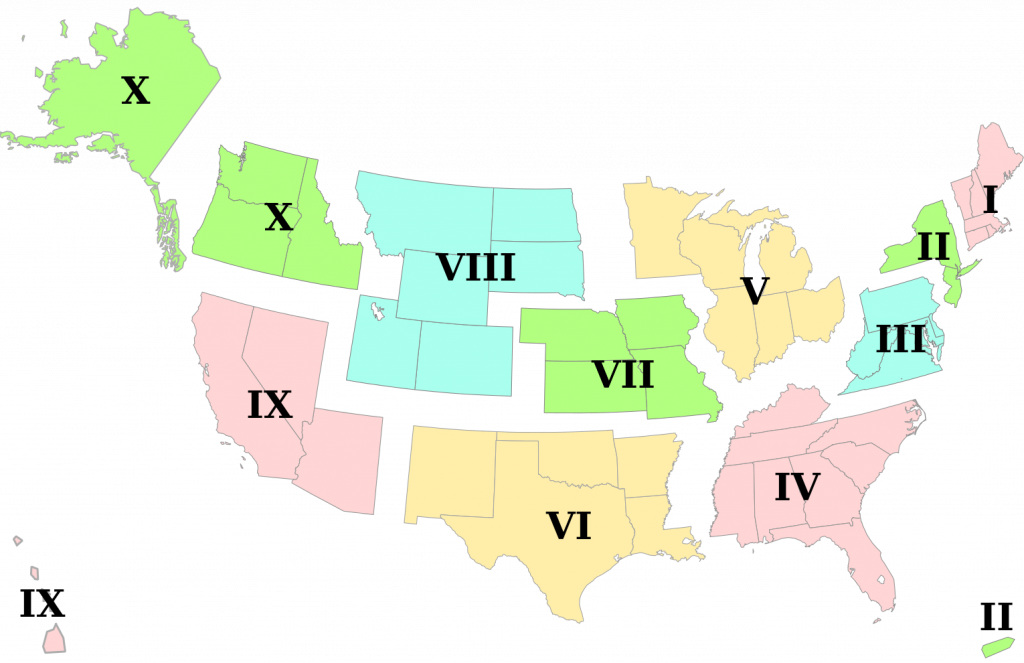
In geography, a region is a part of the planet characterized by a level of similarity based on certain features. Regions are areas that share both homo and physical characteristics. A region is what links places together using any factor that you, as the man geographer, cull. Those factors are common traits such as civilisation, political system, religious beliefs, language or physical features. Regions tin can be mapped and studied. Where historians group events in an era as "periods", geographers grouping areas spatially into "regions".
The AP® Homo Geography Course Description requires y'all to clarify various forms of spatial data then engage in map interpretation and analysis. This AP® Man Geography study guide on regions will help you sympathize that regions are defined by one or more unifying characteristics such as the corn belt, or on patterns of action like hinterlands and ports. To help yous focus your study of world regions, the AP® Human Geography Form Description provides you with reference maps on page 16 that identify globe regions and their boundaries.
Regions of the world can and practise overlap such as the areas of Southeast Asia and Asia. Regions as well have transitional boundaries like between North Africa and Sub-Saharan Africa. Some regions are based on culture (language or religion), while physical geography defines others. There is not total understanding, nonetheless, among geographers on how all regions are defined. I geographer may identify Chad in the region of North Africa, and another would classify Chad every bit role of Central Africa. Geographers will also use two different terms to depict the aforementioned surface area; the Center East and Southwest asia, for example.
What are the Different Types of Regions?
Now that nosotros know that a region is an surface area that shares both human and physical characteristics, permit's look at the three types of regions in geography. Formal, functional and perceptual regions comprise the three classifications of regions used to organize complex ideas into simpler divisions. These three types of regions are of interest to geographers, engineers, and cartographers.
Formal (Uniform) Region
A formal region is an area with a loftier level of consistency in a sure cultural or physical attribute. Formal regions are uniform or homogeneous areas where everyone in that region shares common attributes or traits similar language, climate or political system. Formal regions are primarily used to determine and outline political, cultural and economic regions. Information technology likewise can be described as any geographic location with clearly delineated boundaries whose area is established, and at that place is no disagreement over the expanse a formal region occupies.
Examples of formal regions are varied. A formal region could be any state in the world, like the The states, or the linguistic region of a state. Specific examples that you may see on the AP® Man Geography exam could be: the French-speaking region of Canada, the dairying region of Northward America, or political boundaries demarcating nations and states.
Functional (Nodal) Region
A functional region in geography is an area centered on a node, focal bespeak, or central hub surrounded past interconnecting linkages. The primary node in a functional region features surrounding areas with common social, political, or economical purposes that relate to merchandise, communications, or transportation. In other words, a functional region has a sure set of activities or interactions that happen within it, organized effectually a center node or focal point. The primary node as well has a sphere of economical and social influence that is less noticeable in areas more removed from it.
A functional region, for example, can be a territory that is organized effectually something cardinal, such as a city. The distribution of its services is limited to a certain area, which is its functional or main nodal region. Other examples of a functional region could be the Bank of America or FedEx.
Perceptual (Vernacular) Region
A perceptual or vernacular region is defined by feelings and prejudices that may or may not be truthful. Information technology can also be an idea of a person's mental map. It can be viewed as how people think about or perceive a region based on factors that may not reverberate the truth, such as the Bible Chugalug or Hillbilly region. When labeling perceptual regions, at that place are common assumptions made about the place or people.
For case, if yous say, "this town is living in the past, and there are no job opportunities" it points to a perceptual region. Another person could see the same place entirely differently. They could say, "there are chances for growth, and new business opportunities in this town". A perceptual region does not exist in the literal sense, and the region it inhabits is not explicitly divers. Geographers often differ on the location of a given perceptual region, it is dependent entirely upon personal perspective and based on stance rather than fact. Perceptual regions may, in some cases, contradict facts or regions developed past geographers.
What practise you think of when you hear the phrase "Little Italy"? What words, phrases or mental images come up to mind? How you perceive that phrase helps you empathize perceptual regions.
Regions and the AP® Man Geography Exam
This AP® Human Geography report guide has meliorate prepared you lot to master this topic on the exam and to get you into that exam mindset. The FRQs will require you to write small essays on topics like regions. A FRQ would most likely have you listing the types of regions, define them, and requite examples of each of them. This report guide has given you some examples of the three types of regions, but information technology may assist you more if you come up up with some examples of your ain that chronicle to where yous alive and from your personal perspective.
Here are two questions on regions from an AP® Human Geography Practice Exam.
FRQ from an AP® Human Geography Practice Exam
FRQ iii: The region is a highly contested notwithstanding disquisitional concept in the study of human geography. What is a region and why is it important to human geographers? List 3 types of regions, ascertain them and listing an example of each.
Sample Reply: A region is what links places together using any parameter the geographer chooses. Iii types of regions are formal, vernacular, and functional. Formal regions are compatible. Everyone shares in common one or more distinctive characteristic. An example would be the Mid Due west being considered the Corn Chugalug considering corn is their distinctive feature. Vernacular regions are perceptual. They are a place that people believe exists as part of their cultural identity. An example would be people thinking of sweet tea when they think of "the S". Functional regions are nodal. They are an area organized effectually a focal point. They are tied to that central point by transportation, economic science, or advice systems. An example would be the area of Tampa that receives the Tampa Tribune.
Multiple Pick Question from an AP® Man Geography Practice Test
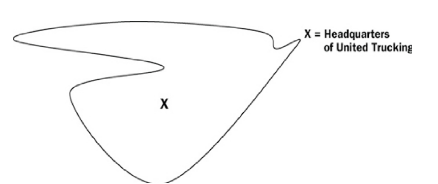
The region outlined in a higher place contains delivery destinations served by United Trucking. Which of the post-obit classifications all-time fits this region?
A. Functional
B. Formal
C. Vernacular
D. Mental
Due east.Perceptual
Right Answer:
(A) A functional region consists of a node and the places linked to that central bespeak through some sort of movement. In this example the region is created by the movement of United Trucking's services to customers in the places within the boundaries shown in the diagram. (B) describes a place with a uniform trait, such as language, nowadays throughout the area. (C), (D), and (E) draw regions similar the Bible Belt or the South in the United states—regions with boundaries marked by people'south ideas rather than overtly measurable characteristics.
Wrapping up Regions
To wrap up this AP® Human Geography study guide, we learned that regions allow us to generalize virtually a mutual characteristic then we tin can ameliorate grouping them. Nosotros are not just concerned with describing cultural patterns, but with examining how they came nearly and their meaning. A region is an area that shares both human and concrete characteristics, and is classified in geography as three types: formal, functional and perceptual. How else are yous studying for the AP® Man Geography Examination? Here is a corking resource to help y'all set for the examination: How to Report for AP® Human being Geography .
Allow'southward put everything into practice. Try this AP® Human being Geography practice question:

Looking for more AP® Human Geography practice?
Cheque out our other articles on AP Homo Geography.
Y'all can also find thousands of practice questions on Albert.io. Albert.io lets you customize your learning experience to target practise where y'all need the nearly aid. We'll give yous challenging practice questions to help you reach mastery in AP® Human Geography.
Start practicing hither .
Are you a teacher or ambassador interested in boosting AP® Homo Geography student outcomes?
Learn more about our schoolhouse licenses here.
Source: https://www.albert.io/blog/regions-ap-human-geography-crash-course/
0 Response to "what information is needed to investigate and describe a region by its geographic characteristics?"
Postar um comentário